Where the Battle Royale Lands Whisper Their Secrets
PUBG maps like Erangel, Miramar, and Sanhok offer diverse battlegrounds and unique gameplay for thrilling chicken dinner victories.
In the beginning, there was only one voice. A lush, melancholic voice that hummed of abandoned schools and silent military bases. Erangel rose from the mists of early access, a green 8×8 km sprawl that taught the world what a chicken dinner truly meant. Back then, every squad memorized its contours the way a sailor knows the stars. Drop School if you're feeling feisty, they'd say, or maybe Military if you want a tactical, still-violent hello. The ferries that now glide across the water were once just a rumor, and the bridges… oh, the bridges have claimed more souls than the blue zone itself.
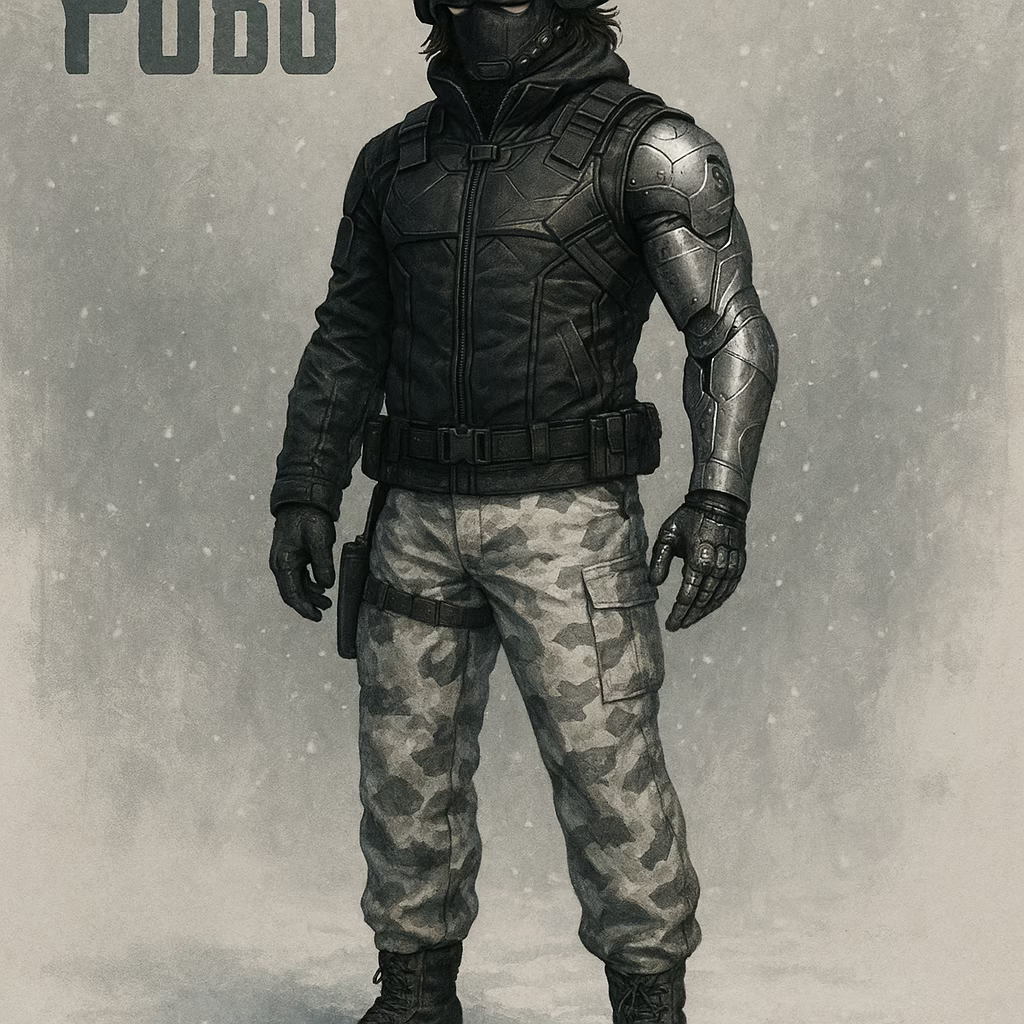
Years have rolled by. It's 2026 now, and the archipelago of battlegrounds has grown into a family of nine. Each map has carved out its own personality, its own grudges and gifts. The player no longer simply drops into a warzone – they enter a conversation with the terrain itself. Some lands are chatty and chaotic, others are patient and punishing. The map selection screen, that quiet prelude to every match, is less a menu and more a gallery of moods.
Miramar draws the long shadow of a sniper's patience. This 8×8 desert queen stretches under a merciless sun, her vast plains and rolling hills daring you to move. "You spot them before they spot you," she murmurs, her voice dry like sand. The big cities – El Pozo, Los Leones, Pecado – glitter with promises of rare gear, but crossing her open heart means a stand-off that can last an eternity. Players learn to read the silence here, because when Miramar finally speaks, it's with a single, decisive crack.
Then there's Sanhok, the little jewel of chaos. A compact 4×4 km of dense jungle, rivers that giggle, and small lakes that hold secrets. She doesn't give you time to breathe. "Right away, find decent loot," she insists, her canopy shaking with the footsteps of a hundred soldiers. Early-game encounters are almost guaranteed here – it's like the map itself gets bored and pushes players together. The Bootcamp, the Ruins, Paradise Resort – these are her flashpoints. Oh, and if you dare destroy a Loot Truck, brace yourself: Sanhok will throw a party, and everyone is invited.
Karakin, at a tiny 2×2 km, is the impatient cousin. You might look at her and see a miniature Miramar, but that's a trick of the eye. Her combat pace is a frenzy; where other maps flirt with danger, Karakin drags you into a brawl before you've even zipped your parachute. Loot hides among barren hills and crumbling buildings, and the tunnel system underneath feels like the island's nervous system, pulsing with fear. Beware the Black Zone – she doesn't just drop bombs, she reshapes the world. Entire buildings vanish, and Karakin whispers, "You thought you were safe there?"
Paramo is the shape-shifter, a volcanic island of molten lava and secrets. At 3×3 km, she refuses to be pinned down. Every time you visit, landmarks play musical chairs, and the terrain rearranges itself like a dream half-remembered. Four major cities may roar with activity, but Paramo laughs, "You thought you knew me?" The lava flows are both a hazard and a storyteller, recounting old battles to anyone who pauses long enough to listen...
Taego arrives with an 8×8 km sigh of green forests and open grassland. She's the map that lulls you with wide spaces, then suddenly reminds you of the water between her islands. The zone at your back, a bridge ahead – that's her idea of tension. "Plan ahead, stay safe," she warns in a motherly tone, though her swims are long and full of lurking eyes. She taught a generation of players the value of a vehicle and the terror of being caught short.
Deston is a city divided, an 8×8 km canvas of sharp contrasts. To the left, rocky residential areas and endless roads. To the right, a jungle of skyscrapers and flooded urban sprawl where every step is a negotiation. "Movement is difficult," Deston admits with a shrug, her waters reflecting the neon of fallen civilization. This map doesn't just test your aim; it tests your ankles and your patience.
Snowy Vikendi, at 6×6 km, is the civilized warrior. Her public transport still runs, trains chugging along a fixed schedule as if war were just another weather condition. "All aboard," she chuckles, steam rising from the engine, though the journey is anything but stealthy. Eleven train stations dot the pine forests and mountains. Cosmodrome, Dinoland, Castle, Cement Factory – these names carry the weight of high-tier promises. Yet Vikendi's beauty is a quiet trap; the white silence can explode at any moment.
And then there's Rondo, the vast 8×8 km mystery. "Running around, it seems much bigger," players gasp, and Rondo nods, her bamboo groves rustling with ancient wisdom. With few large bodies of water, nearly every inch is accessible, and yet the circle always feels like it's playing hide and seek. Myriad vehicles dot the landscape; use them, or face the zone at your back and the enemy in front. Rondo teaches a brutal, beautiful lesson: space alone doesn't grant safety.
For a long time, the player's heart was at the mercy of the random queue. But the developers heard the longing. A map selection function stepped into the light, letting you choose up to five destinations. The game would then weave its matchmaking magic, filling lobbies swiftly even if it sometimes meant inviting a few bots to the party. "Better wait a little longer and have your favorite," the community shrugged, and so a new era began. It was an imperfect step, but an important one – a recognition that these lands have become homes, not just arenas.
Now, in 2026, the maps of PUBG are more than code. They are characters in a never-ending story. They breathe, they bleed, and they wait. The flight path appears, and the player chooses not just a drop point, but a conversation – with the sand, the snow, the jungle, the lava. So go ahead: select your map, listen to its whisper, and let the chicken dinner decide the rest.
DISCUSSION