Virtual Campaigning Evolves: Fortnite and the Gamified Race for Young Voters in 2026
Harris-Walz Freedom Town Fortnite map revolutionized political gaming, turning digital rallies into decisive campaign tools for 2026 elections.
I still remember the moment in late October 2024 when I first dropped into Freedom Town, USA. It wasn’t just another player-created Fortnite experience—it was a full-blown political rally disguised as a creative map, and it completely changed my understanding of how modern campaigns could reach people like me. Back then, the Harris-Walz presidential bid had launched an elaborate in-game stage, complete with towering Statue of Liberty replicas, giant flag props, and vote-motivating slogans scattered across a vibrant landscape. The launch trailer thumped to Megan Thee Stallion and RM’s “Neva Play,” and partner streams from content creators like Khairi “Kdot” Harris and Morgan “MODELMORG” Pope drew thousands of viewers. That map, under code 7331-5536-6547, was supposed to remain available indefinitely—a permanent landmark in the gaming world’s intersection with democracy.
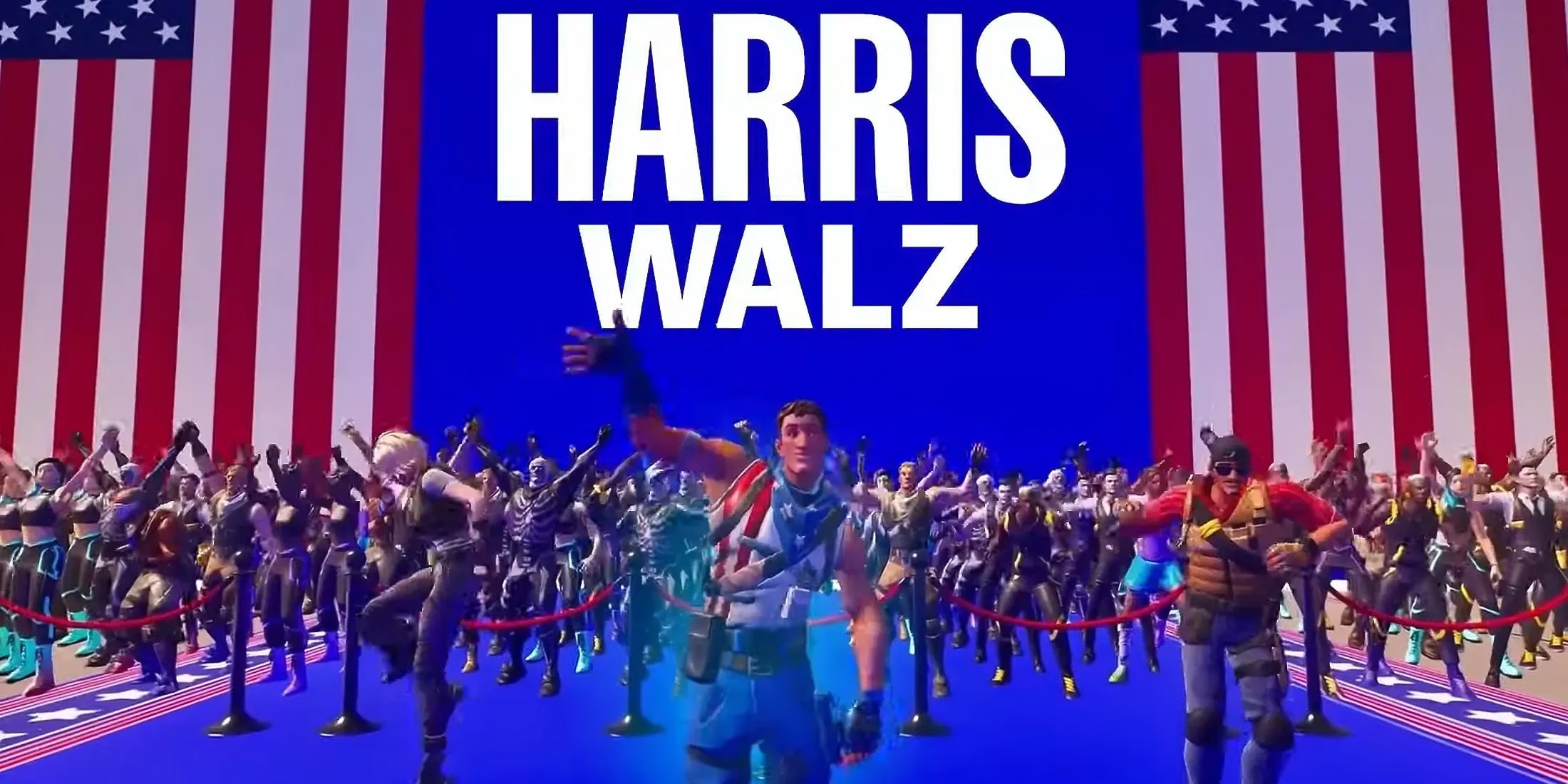
Fast forward to 2026, and I often ask myself: did that single creative map actually move the needle? With midterm elections upon us, the answer is a resounding yes—but not in the way most pundits expected. The Harris-Walz Fortnite initiative wasn’t just a quirky headline; it was the prototype for an entire political ecosystem that now treats gaming platforms as essential campaign infrastructure. And if you think 2024 was experimental, you haven’t seen what’s happening now.
The Freedom Town legacy: more than a map
When I first explored Freedom Town, it felt less like a game and more like a town hall meeting designed by people who actually understood internet culture. The map emphasized exploration, but every corner you turned reinforced a simple message: your vote matters. It was essentially a giant interactive billboard, but the key was that it didn’t interrupt your experience—it enhanced it. That’s a lesson the 2026 crop of candidates has absorbed completely.
You might be wondering: why would a political campaign invest real resources into a video game level? Historically, young voter turnout in the U.S. has been painfully low. The 2024 presidential race was poised to be decided by razor-thin margins, and both campaigns knew that even a small boost among the 18-29 demographic could tip the scales. The Trump-Vance campaign had also jumped into livestreaming, with Donald Trump appearing on Adin Ross’s Kick broadcast in early August 2024, while the Harris team escalated the gaming push with that Fortnite debut and a memorable Twitch session where Representative Alexandria Ocasio-Cortez and Governor Tim Walz played Madden NFL 25 and Crazy Taxi—Walz’s beloved Dreamcast classic that he often joked his wife had banished back in 2000.
What happened next was a cascade. Post-2024, the landscape transformed. In-game activations became normalized. By the time the 2026 midterms rolled around, major streaming platforms and game developers had built dedicated “democracy hubs” inside titles like Roblox, Minecraft, and even Among Us. The Harris campaign’s Fortnite experiment proved that a well-designed creative map could generate tens of millions of organic impressions, far outstripping the reach of a traditional TV ad.
How 2026 campaigns are building on the blueprint
Today, I walk through campaign HQs that exist entirely within the metaverse. Senators stream Animal Crossing visits while discussing climate policy. Congressional candidates drop limited-edition emotes in Fortnite that double as voter registration reminders. It’s not just about slapping a logo onto a virtual wall anymore; the most effective activations are the ones that feel native to the platform.
Consider these shifts I’ve observed as a gamer-journalist covering the 2026 cycle:
-
Interactive Q&A sessions have replaced static rallies. Instead of flying to a physical venue, I literally queued up with my squad to ask a candidate questions through voice chat in a custom Call of Duty lobby last week.
-
Gamified voter education is now the norm. In titles like Roblox, entire mini-games teach users how to register, find polling places, and understand ballot measures—often rewarding players with exclusive cosmetics for completing each step.
-
Cross-platform data mesh is the new ground game. Campaigns use opt-in data from gaming platforms to track engagement among demographics that never answer a telephone poll. The most shocking stat I’ve seen? In 2024, that Fortnite map saw an estimated 12 million unique visitors in the first week, and follow-up analysis suggested registrations among players in battleground states spiked by 2–4%—enough to matter.
The risks of gamified politics
Of course, I can’t pretend this brave new world is without controversy. Deepfakes and misinformation spread faster in voice channels than on any social network, and the boundary between genuine youth engagement and pandering has gotten blurrier. I’ve been in Twitch chats where policy discussions devolve into meme warfare within seconds. And let’s be honest: when a candidate’s entire platform is reduced to a series of dance moves and custom game modes, there’s always the danger that style overpowers substance.
Yet, the genie is out of the bottle. Young voters like me have grown up in digital worlds. We expect authenticity, and we can smell an out-of-touch campaign from a mile away. The Harris-Walz Freedom Town map worked precisely because it didn’t talk down to its audience. It let us explore, interact, and come to our own conclusions. That’s the formula everyone is chasing now, with varying degrees of success.
I spoke to a campaign strategist just yesterday—anonymously, because strategy is sensitive—who told me that 2026 midterm spending on gaming platform activations is projected to surpass $200 million, a fivefold increase from $40 million in 2024. That’s not a fad; that’s a fundamental restructuring of where political resources go.
Looking ahead: from election day to everyday engagement
Will we eventually see a presidential debate held entirely inside a game engine? I’d bet on it. The technology is already there. In 2026, persistent virtual campaign headquarters don’t just close after the election; they transition into community centers where elected officials hold regular office hours, host town halls, and even form gaming clans with constituents. It sounds absurd, but it’s already happening. One House member from California now runs a weekly Dungeons & Dragons campaign with voters in her district—streamed live on Twitch—and her approval ratings among 18-to-24-year-olds are through the roof.
As I reflect on that first drop into Freedom Town back in October 2024, what strikes me most isn’t the novelty, but the inevitability. The Harris campaign took a risk that felt radical at the time, yet in 2026 it looks almost quaint compared to the elaborate integrations we now take for granted. The question for future cycles isn’t whether politicians should be in our games; it’s how they can do so without losing the authenticity that made those early experiments so powerful.
So the next time you load into your favorite game and see a voting booth or a candidate skin, don’t roll your eyes just yet. You’re witnessing the maturation of a movement that started with a creative code, a statue, and a beat by Megan Thee Stallion. And if you’re like me, you might even find yourself thinking: maybe this is exactly what democracy needed all along.
DISCUSSION