The Absence of Kicks in Fortnite Chapter 6 Season 2 Battle Pass Sparks Player Debate
Fortnite Chapter 6 Season 2 stirs up excitement with a new map, but the glaring absence of Kicks and their high price sparks community debate.
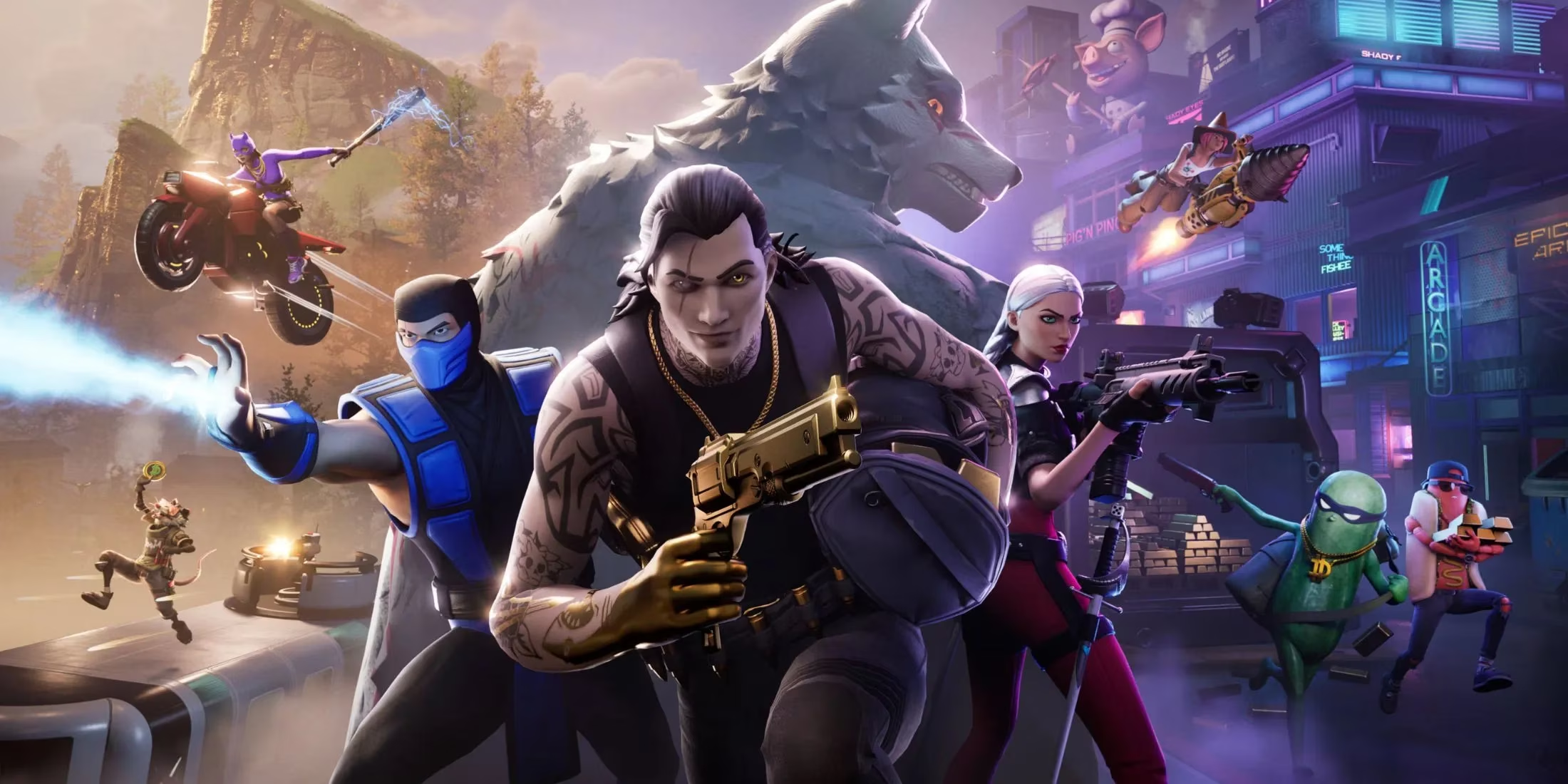
As the digital sands of Fortnite's island shifted once more to herald the arrival of Chapter 6 Season 2, players eagerly dove into the new map locations, experimented with the revamped arsenal, and began the grind through the fresh battle pass. Yet, amidst the excitement for new skins and emotes, a conspicuous omission caught the community's collective eye. A vocal segment of the player base took to forums and social media platforms, posing a pointed question that echoed across the metaverse: where were the Kicks? Since their high-profile debut in late 2024, these stylish footwear cosmetics, often in collaboration with brands like Nike, had carved out a niche in the Item Shop. Their complete absence from the latest seasonal pass, and indeed from all passes since their introduction, struck many as a curious and deliberate choice by Epic Games.
The Price Point Predicament 🎯
The discussion around Kicks has never been solely about their availability; their valuation has been a persistent point of contention. Many gamers have voiced strong criticism regarding the cost, arguing that the price tags should be slashed by half. To put this in perspective, a significant number of Nike-branded Kicks are set at a premium 1,000 V-Bucks. This pricing structure becomes particularly jarring when players note that entire character skins—complete outfits with unique models and textures—can sometimes be purchased for a mere 800 V-Bucks. This economic dissonance leads to a surreal scenario where a single accessory, a pair of virtual sneakers, can carry a higher monetary value than the entire avatar it adorns. The community's frustration is palpable, as they feel the cost does not align with the perceived value, especially when compared to other cosmetic offerings in the game's extensive marketplace.
A Strategic Omission or a Missed Opportunity?
The debate intensified when a player named like_spvce highlighted the pattern on Reddit, noting that Kicks have been excluded from every battle pass and similar reward track since November. This observation sparked a wave of speculation and historical comparison within the community. Veteran players were quick to draw parallels with Epic's past introduction of vehicle cosmetics. The prevailing theory, as suggested by several commenters, is that this is a calculated business strategy. The pattern seems to be: introduce a flashy new cosmetic category, allow players a brief 'taste' through limited-time events or initial shop rotations to generate hype and demand, and then permanently relegate it to the premium Item Shop. This model ensures a steady stream of direct purchases rather than bundling high-demand items into a one-time pass purchase. However, for a season like Chapter 6 Season 2, which heavily emphasizes personal flair and aesthetic expression, the absence of Kicks felt like a missed thematic beat to many fans.
The Original vs. Licensed Dilemma ✨
Amidst the calls for inclusion, an interesting proposal emerged from the player base. Several fans argued that Kicks in the battle pass didn't necessarily need to be licensed, high-cost collaborations. They pointed to Epic Games' own catalog of original footwear designs, which are typically offered at a more palatable price point. The community's wishlist included ideas like:
-
Tier 1 Reward: A sleek, futuristic runner design.
-
Mid-Pass Reward: Battle-scuffed military boots fitting the season's theme.
-
Bonus Tier Reward: Glowing, animated sneakers for dedicated players.
This approach, they reasoned, would satisfy the desire for customizable footwear while adhering to the battle pass's value proposition, avoiding the licensing fees that likely contribute to the 1,000 V-Buck tag for branded items.
The Bunny Slipper Controversy: A Case Study in Value
The conversation took an ironic turn with the case of Fortnite's bunny slippers. Recently, this whimsical cosmetic item received additional edit styles, granting owners new color variants at no extra cost. This act of generosity, however, served as a stark contrast to the treatment of premium Kicks. Players immediately questioned why the expensive Nike collaborations, like the recent Air Jordan 11s which were released in two separate colors, didn't receive similar multi-style treatment. Instead, each color variant was sold individually for the full 1,000 V-Bucks. The bunny slippers, priced at a more accessible 600 V-Bucks, included both pink and blue styles in a single purchase. This discrepancy led to heated discussions about fairness and value perception. While some speculated that restrictive licensing agreements with Nike might be the culprit, the lack of transparency only fueled player skepticism. The table below illustrates the value disparity that has fans talking:
| Cosmetic Item | Base Price (V-Bucks) | Included Edit Styles | Price per Style |
|---|---|---|---|
| Nike Air Jordan 11 Kicks | 1,000 | 1 (sold separately) | 1,000 |
| Fortnite Bunny Slippers | 600 | 2 (Pink & Blue) | 300 |
| Typical Epic-Original Skin | 800 - 1,500 | Often 2+ | Variable |
Looking Toward the Horizon: Hope and Uncertainty
Despite the current frustrations and puzzling corporate decisions, the overarching sentiment within the Fortnite fandom remains cautiously optimistic. The game's history is one of evolution and response to community feedback. Many loyal players are holding out hope that future seasons, special events, or competitive circuits will incorporate Kicks as earnable rewards. The desire is for a more balanced ecosystem where coveted items can be both purchased for convenience and earned through dedicated gameplay. The introduction of Kicks represented a new layer of personalization for players' avatars, and the community is eager to see that potential fully realized in a way that feels rewarding and fair. As Fortnite continues to build its legacy into 2026 and beyond, the resolution of the 'Kicks question' will be a telling indicator of how Epic Games chooses to balance monetization with player satisfaction in its ever-expanding digital universe.
DISCUSSION