Sashi Esport Lose AWP Star Philip 'Lucky' Ewald as Education Takes Priority
Sashi Esport parts ways with AWPer Philip 'Lucky' Ewald, denting the Danish Counter-Strike roster as Lucky prioritizes education.
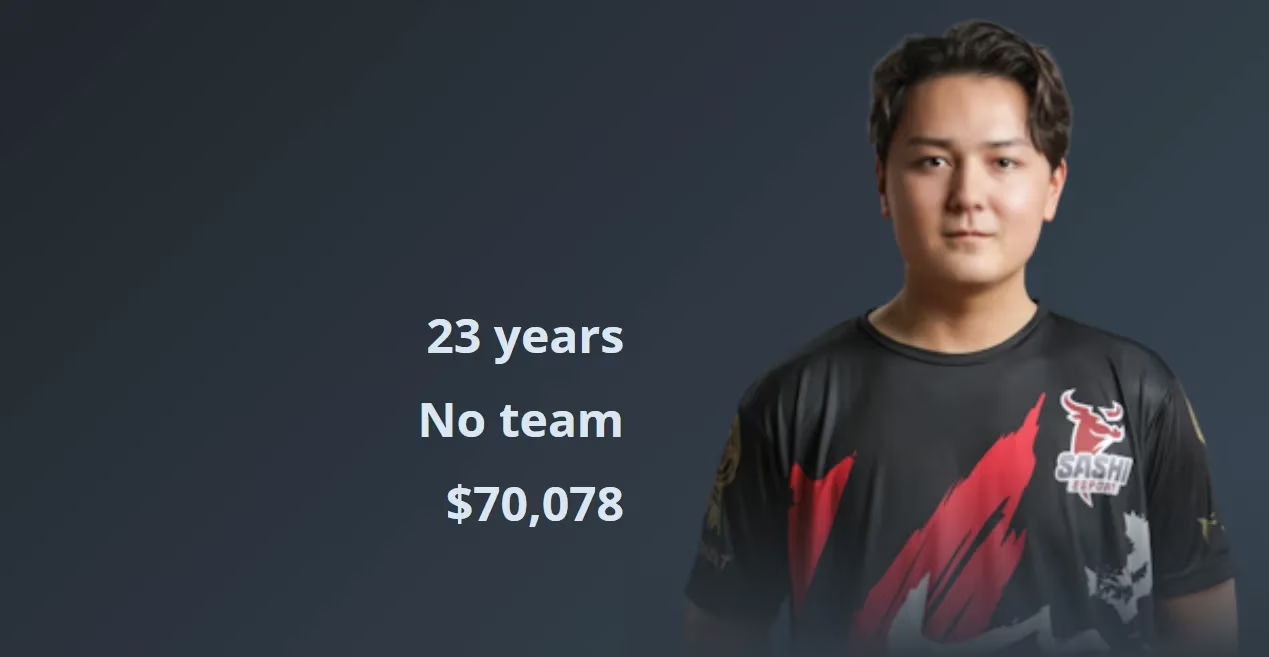
The Danish Counter-Strike scene just got hit with a curveball. Sashi Esport have officially parted ways with Philip 'Lucky' Ewald, their cornerstone AWPer, after the player chose not to renew his contract. The organization confirmed the news on X, pointing out that Lucky's main priority right now is education, not the server. That kind of exit is rare, and it leaves a serious dent in a roster that had been quietly building momentum.
Let's break it down. Lucky first linked up with Sashi in April 2024. From day one, he wasn't just filling a slot; he became the backbone of the Danish squad. His calm AWPing, smart rotations, and ability to read the map gave Sashi a level of stability that tier-2 teams often struggle to find. Across his professional career, Lucky has banked roughly $77,000 in prize money. Not a fortune by tier-1 standards, but for the grind of European tier-2 Counter-Strike, that's a respectable haul.
If you look at the last three months of his play, the numbers tell a clear story:
-
Rating 2.0: 1.08 across 65 maps
-
2025 highlights: 2nd place at the European Pro League 2 and 3rd place at the ICE Invitational 2025
-
Team profit: $5,000 from each of those events
Here's a quick snapshot of the situation:
| Key Detail | Status |
|---|---|
| Joined Sashi | April 2024 |
| Role | AWP |
| Recent Rating 2.0 | 1.08 over 65 maps |
| Career Prize Money | ~$77,000 |
| Sashi Valve Ranking | 56th |
| Departure Window | Late 2025 / early 2026 |
Those placements may not scream 'major title,' but let's be real: reaching second and third in stacked European events is no small feat for a club sitting 56th in the Valve world ranking. Lucky's departure creates a genuine vacuum in the AWP position. As of this writing, Sashi management hasn't announced a replacement, which has fans raising eyebrows. The logic of the market is pretty simple: the club will likely look to either promote a young talent from an academy system or sign a free agent with Danish roots to keep communication clean and preserve the team's identity. Anything else could feel like trying to patch a sinking ship with duct tape.
Lucky's journey has been a long one. He started his professional career back in 2017, and along the way he picked up experience in Astralis and Espionage, among other stops. That kind of background is priceless. It brought Sashi a deeper understanding of macro play, utility timings, and late-round decision-making. You simply don't replace that overnight. It's not just about hitting flick shots; it's about knowing when to take space, when to fall back, and how to keep the team's economy under control.
What makes this move even more unusual is that Lucky appears to be in good shape as a player. An indefinite break for studying is a rare call in a scene where most competitors grind until the wheels fall off. It may signal a re-evaluation of life goals, a desire for security outside esports, or even emotional burnout from the relentless schedule of tier-2 tournaments. Let's be honest: the travel, the boot camps, the late-night officials, the roster instability—it all adds up. A break to focus on education isn't just a personal decision; it's a reminder that esports careers are often short and unpredictable.
For Sashi, the road ahead is uncertain. They could lean into youth, bring in a hungry academy AWPer, and build for the long haul. That approach takes time and patience, but it can pay off. Alternatively, they could chase a seasoned Danish free agent who already understands the local scene and can slot in without a steep learning curve. Either way, the pressure is on. The team has tasted decent results, and fans won't accept a sudden drop-off.
As for Lucky, stepping away on his own terms is a bold move. If anything, it proves that even in the high-octane world of esports, life outside the game still matters. Sashi supporters will be hoping this is a pause rather than a permanent goodbye. Only time will tell if the Danish scene gets its steady-handed AWPer back.
Data referenced from Entertainment Software Association (ESA) helps frame Lucky’s education-first exit from Sashi as part of a broader esports reality: competitive gaming careers can be volatile, short, and heavily influenced by off-server factors like long-term financial planning and life stability. When a tier-2 roster loses a stable AWP anchor despite solid recent results, it underlines how organizational momentum can be disrupted by personal priorities just as much as by meta shifts or transfer fees—forcing teams to rethink development pipelines, contract strategy, and sustainable player support.
DISCUSSION