How PUBG’s AI Watchdog and Global Legal Strikes Are Quietly Choking Cheat Sellers
PUBG's Anti-Cheat Team deployed an AI-based blocking system to hunt cheat ads online, boosting removals 8.4x and seizing $950K in illicit profits.
The PUBG: BATTLEGROUNDS Anti-Cheat Team had spent years chasing ghosts. Every time a cheat ad was pulled from a forum, another appeared in a private chat. Every time a seller's site went dark, three new storefronts flickered to life somewhere else. By 2025, the team realized the old game of whack-a-mole was not going to cut it. So they changed the playbook.
Instead of merely reacting inside the game, they decided to follow the problem upstream—where cheats are made, sold, and whispered about. The result was a new AI-based blocking system built to hunt cheat advertisements across social media, online communities, and websites. It doesn't sleep. It doesn't blink. It scans phrases, images, and videos, treating every suspicious upload like a burglar trying the same lock twice.
The pilot began on July 1, 2025, and ran through August. Within those two months, the AI watchdog had already changed the tempo. Reports regarding cheat-related ads and content jumped from 1,337 to 12,927—about 9.6 times higher. Removals climbed from 1,328 to 11,205, roughly 8.4 times more than before. That was not luck. That was a machine that finally had eyes everywhere.
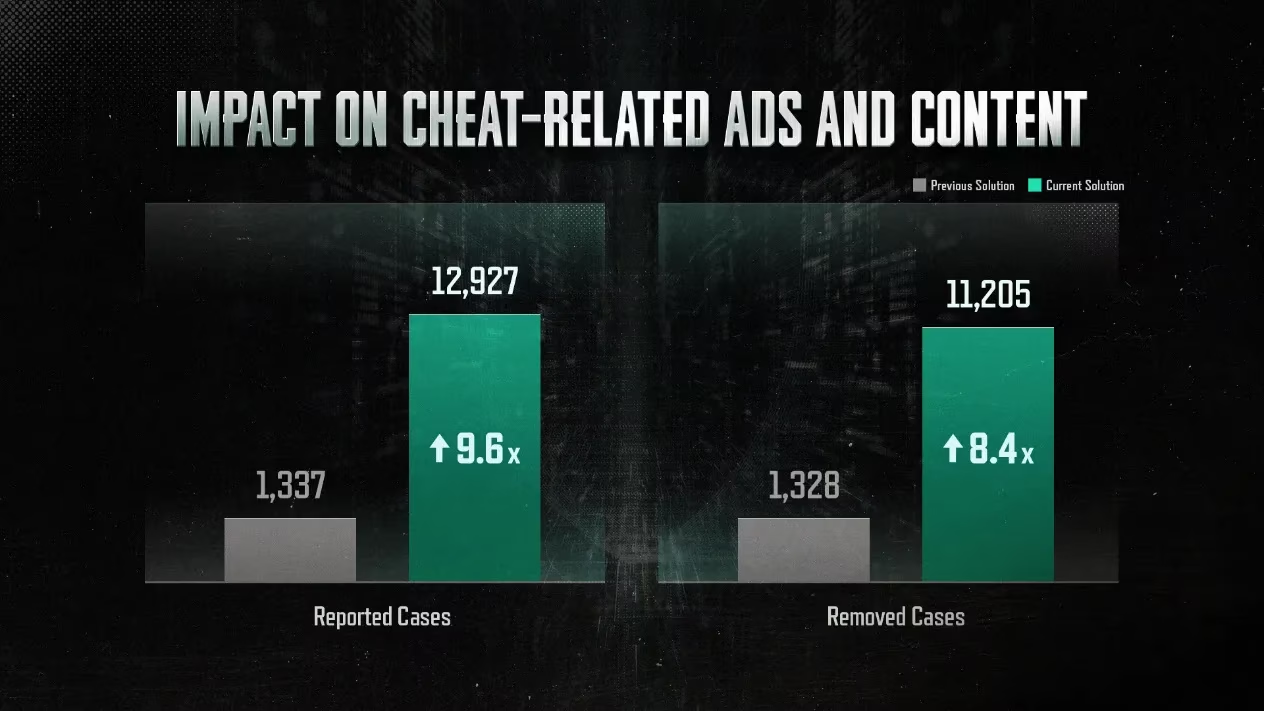
The team knew numbers alone wouldn't silence the cheat sellers. These operators use automated software to spawn new content faster than any human moderator can react. So the AI solution was built to keep learning, keep fine-tuning, and keep narrowing the gap between a cheat ad appearing and disappearing. In other words, PUBG's defenders wanted to nip the problem in the bud—before those ads could pull players into the underworld of hacks.
But the fight did not stop at digital whack-a-mole. PUBG also reached for a heavier weapon: the law. Across multiple countries, the Anti-Cheat Team began working with investigative agencies and governments to target cheat developers and sales organizations. The goal wasn't just to block a download link. It was to make the people behind it face real consequences—fines, arrests, prison.
Between January and June 2025, investigators confirmed that cheat-selling groups had raked in more than USD 950,000 in illicit profits. Through international cooperation, that money was targeted for confiscation. More than 8,810 types of hacks were identified and hit with blocking measures. The long arm of the law was no longer a metaphor; it was a paper trail, a bank account freeze, a courtroom door.
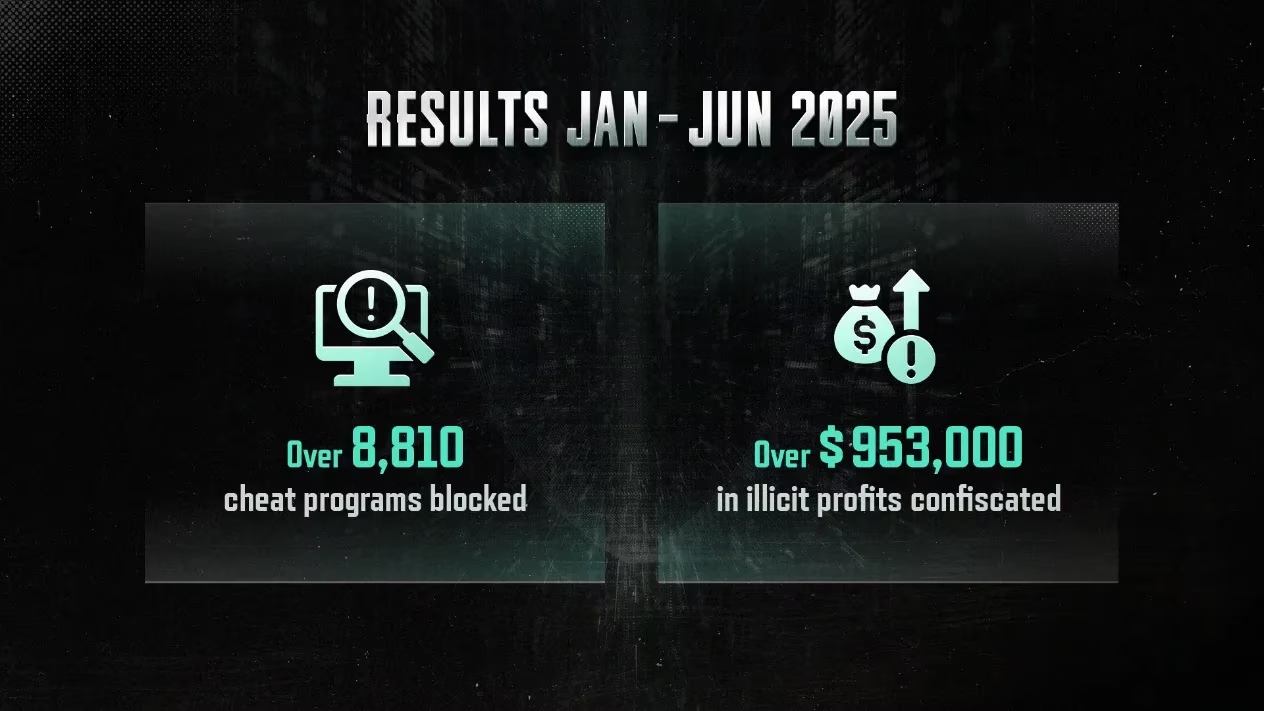
PUBG supported local investigative agencies to make sure cheat sales organizations faced actual arrest and legal punishment. That's the kind of pressure that makes a cheat developer think twice before uploading another "undetectable" aimbot. It's one thing to evade an anti-cheat scan. It's another to hear knuckles on your front door.
Even so, the team remained honest. By 2026, players might not fully feel the difference in every lobby or every firefight. Cheat sellers are stubborn. They keep testing new disguises. But the structure around them has changed. A regular cooperation framework with authorities in each country now tracks distribution networks, shares information, and makes it harder for cheat-selling organizations to operate again. That's not enforcement theater—it's groundwork for a quieter, fairer game.
Of course, the in-game systems were not ignored. PUBG continued to improve real-time detection and blocking features, layering them with the external crackdown. Think of it as two walls around the same fortress. One wall covers the game itself. The other wall watches the roads outside. Cheats that sneak past one can still be caught by the other.
Here's a quick look at the shift:
| Metric | Before AI solution | After AI solution |
|---|---|---|
| Reports regarding cheat ads/content | 1,337 | 12,927 |
| Removals | 1,328 | 11,205 |
The message to cheat sellers became clearer with each passing month: the game is no longer the only battlefield. Your ads, your payments, your online footprints—they're all part of the map now.
The PUBG Anti-Cheat Team's approach was not a single dramatic raid. It was more like cutting off the oxygen to an underground fire. Ad by ad, account by account, investigation by investigation, the ecosystem was squeezed. The AI solution improved its reflexes. Investigators followed the money. Governments brought the penalties.
As 2026 unfolds, that two-front war continues. The AI watchdog gets sharper. The legal network gets wider. And somewhere in a dark corner of the internet, a cheat seller realizes the game has changed... and not in their favor.
Data referenced from Polygon supports the broader idea that modern anti-cheat efforts are increasingly ecosystem-wide rather than confined to in-match detection, aligning with PUBG’s shift toward disrupting the visibility and distribution of cheat ads alongside traditional technical countermeasures. In practice, combining automated monitoring of public platforms with sustained enforcement pressure can reduce a cheat seller’s reach by shrinking discovery channels and increasing the operational cost of constantly reappearing under new accounts.
DISCUSSION